Jorge Rando (Málaga, 1941)

Jorge Rando was born in 1941 in Málaga, a coastal city in southern Spain. In 1936, the Spanish Civil War broke out, and the rebel troops arrived by ship at the port of Málaga from northern Morocco. In the face of the bombings, many citizens decided to flee the city. Rando’s mother, nine months pregnant with her first child, Salvador, joined her husband alongside thousands of soldiers and civilians retreating and fleeing along the Málaga–Almería road. An endless human procession of children, women and men formed what would later become known as La Desbandá.

His family made their way to Valencia, where they were taken in by the city’s First Instance Court judge. They did not return to Málaga until shortly after the end of the war, in 1940. A year later, in a country immersed in the hardships of the post-war period, Jorge Sánchez was born on the night of Saint John’s Eve. He would later adopt his mother’s surname, Rando. His family had been torn apart by the conflict: some members had fought on the Republican side, while others had fought for the Nationalist side. Some died in the bombings, others on the battlefield or in prison.

His parents did not want to pass the ghosts of the war on to their children and raised them with a spirit of love and forgiveness towards others. These values would go on to shape the personality of the young Rando.

From an early age, he showed a particular interest in the humanities. An avid reader, he enjoyed writing and was constantly drawing, demonstrating a natural artistic talent. His mother would make use of his skills by asking him to create drawings for special occasions and anniversaries celebrated by friends and family, which she would then frame as gifts. At the age of just sixteen, he created a large mural measuring 20 metres by 3 metres.

1950 – 1960

In 1950, he passed the entrance examination at Instituto Gaona and began his secondary education at Colegio de las Mercedes in Málaga. Around this time, his father moved to Madrid for work, while his wife and four children remained in Málaga. Jorge Rando and his siblings would regularly travel to the capital to visit their father. During one of these trips, he had the opportunity to visit the Prado Museum. His encounter with the great masters of painting, such as Velázquez, Goya and El Greco, was a profound aesthetic experience.

His vocation to help others led him, at a very young age, to consider joining the Missionaries of Africa, popularly known as the “White Fathers”. These missionaries carried out their work across the African continent and were distinguished by living under the same conditions as the local population. To pursue this calling, he decided to enter the Diocesan Seminary of Málaga. This period would have a lasting impact on both his human and artistic development. The long hours devoted to study allowed him to delve deeply into fields such as philosophy and theology, which would ultimately become the foundations upon which his artistic vision was built.

His faith is reflected in the Religious Painting cycle, which he began in the late 1970s. He is the first artist to depict the complete Passion of Christ, from the Entry into Jerusalem to the Crucifixion and Resurrection. His works, dominated by green and magenta, portray Christ blindfolded, a symbol of human suffering and humiliation. Rando was the first Catholic artist to exhibit his religious work at the headquarters of the Evangelical Church in Hannover, Germany, and since then, one of his paintings has presided over the chapel of the EKD.

During his years at the Seminary, he deepened his studies of philosophy and mystical literature, becoming an avid reader of Saint John of the Cross. His reading extended to German Idealism, with thinkers such as Kant and Hegel; literature, through Schiller, Lessing and Goethe; and Romantic writers such as Schlegel, Novalis and Eichendorff, among others. These readings awakened in him a desire to explore their ideas further and to delve into humanistic and existential questions.

This growing intellectual curiosity began to clash with the confines of the Seminary, and his restless spirit eventually led him to travel to Germany—a country of thinkers, a land of philosophers and poets, and a place where artists had fought to preserve the individual soul of art.

1960 – 1970

At just 20 years of age, Jorge Rando arrived in Germany, where the scars of the Second World War were still painfully visible. He settled in Cologne and began working in restoration and as an apprentice welder, skills that he would later develop in the creation of his sculptures. In 2007, he created a group of sculptures that became the first open-air museum in Málaga, located in the Nasrid gardens of the city’s Cathedral.

During these early years, he lived in a small studio in one of the neighbourhoods of Cologne’s Old Town. The streets were home to lifelong residents, women working as prostitutes, immigrants and homeless people, whom the artist began to portray tirelessly. Due to the limited space of his room, he worked primarily with watercolour and Indian ink. No works from this period have been preserved, as they were given away by the artist, sold or simply lost.

By the late 1960s, Jorge Rando had his own studio and began working with a palette knife, creating his famous Clochards (urban homeless people), which remain among the few portraits based on real individuals in the artist’s oeuvre. At the same time, he began depicting the stories and lives of the prostitutes he encountered, to whom he would eventually dedicate a cycle in the 1990s entitled Prostitution.

In 1963, he enrolled at the University of Cologne (Universität zu Köln) to further his studies in philosophy. These were intense years in which he explored the relationship between philosophy and artistic expression. He travelled throughout Germany, attending seminars and lectures, including those given by Professor Blocherer in Munich. During this period, he visited museums and art centres, deepening his understanding of the Expressionist movement. On one of his trips to Berlin, he encountered Käthe Kollwitz’s Pietà. The image of the mother, illuminated by a beam of light against a backdrop of suffering, had such a profound visual impact on him that he would eventually dedicate a cycle to her entitled The Passion of Käthe Kollwitz.

In 1967, he settled permanently in Cologne. Drawing on his experience in restoration and with the aim of bringing the worlds of art and culture together, he began helping to restore the city’s historic quarter, which was still deeply scarred by the effects of the Second World War. He opened several establishments, including the Strickstrumpf, considered the pinnacle of jazz in Germany and the country’s first live-music venue to host daily performances by New Orleans bands and renowned musicians such as Dexter Gordon. It soon became a meeting place for the artists and intellectuals of the time. In 1968, at 8 Salzgasse Street, he opened the first Flamenco tavern in Germany, which hosted leading figures of the genre, including Paco de Lucía, Camarón de la Isla and Paco Cepero.

The 1960s, which Jorge Rando experienced in Germany, were a decade marked by the struggle for freedom, the hippie movement, decolonisation, the beginnings of political change in Latin America, and the events of May 1968, which the painter attended alongside a group of intellectuals. During these years, he travelled extensively around the world, mainly by train and ship. The long journeys became a source of inspiration for his paintings and writings.

But one experience would become a turning point in his artistic development: Africa. It marked the beginning of one of his most powerful and moving cycles, Afrika, which has continued to reappear intermittently throughout his career.

1970 - 1990

In 1972, he opened Germany’s first Rock Center, featuring the bands Rockmac and Groovy Inspiration. His aim was to create a “Music Factory” that would challenge unfair pricing policies affecting both audiences and musicians. The artist worked closely with the renowned disc jockey Eric Jomes.

At this stage of his life, he also enjoyed other interests, including football and his great passion for speed, taking part in rally competitions. He continued to live in Cologne and began exhibiting his work in art galleries in Cologne, Düsseldorf, Stuttgart, Berlin, Munich and Hamburg. During this period, he also held exhibitions in Spanish cities such as Barcelona, Madrid and his native Málaga. In 1979, he married Margit, whose face and striking red hair became a recurring subject in his work, featured in his Portraits cycle.

In the early 1980s, the couple decided to step away from the fast-paced lifestyle they had led in Germany and divided their time between the city and their country home in Málaga. Passionate animal lovers, they lived surrounded by nature alongside their eight dogs. During this period, Jorge Rando withdrew into his studio and distanced himself from the cultural scene, with the exception of his contact with the Künstleratellier 21 group in Cologne, founded by artist Evelyn Sion. He decided not to hold exhibitions during these years.

Instead, he devoted himself to study, and his artistic development increasingly took the form of an uncompromising plea for the return of spirituality to art, a concept to which he dedicated numerous writings. During this period, his artistic cycles began to overlap and intertwine, giving rise to new ones such as Children and Maternities.

From the 1990s onwards, he returned to the European cultural scene, exhibiting in Málaga, Barcelona, Madrid, Cologne and Hamburg, as well as at contemporary art fairs. In 2003, he established a studio in Hamburg, where he could paint during his stays in Germany. These periods gave rise to cycles exploring the relationship between human beings and nature, such as Miniatures and Vertical Horizons.

1990 - 2026

In 2014, he published Thoughts and Reflections by Jorge Rando. His work has been studied by prominent figures in the international cultural sphere, and numerous catalogues and books have been translated into English, German and Chinese. His bibliography can be found in leading libraries, museums and universities around the world, including the Library of Congress in Washington, Yale University, the Cleveland Museum of Art, the Metropolitan Museum of Art in New York, Princeton University Library, the National Library of Spain, the Institut national d’histoire de l’art in Paris, Columbia College Chicago, the Sächsische Landesbibliothek, the Universitätsbibliothek Dresden, Oxford University, the University of Cambridge, Complutense University of Madrid, Pompeu Fabra University in Barcelona, the University of Málaga, the German National Library, Xiangtan Academy of Fine Arts, Chengdu Academy of Fine Arts, the Beijing Academy of Fine Arts, Shenzhen Art Museum and Xuzhou Art Museum, among others.

In recent years, his artistic production has become an introspective journey through which he explores and expresses his own spiritual and philosophical condition through painting, with cycles such as The Birth of Colour, New Dawns Will Be Born and Beauty Weeps with Tragedy.

His exhibitions in Paris, Lisbon, Strasbourg, Berlin, Hamburg, Emden, Madrid, Barcelona, New York and Ratzeburg—where the success of the exhibition led the Barlach Museum to dedicate an entire gallery to his work—together with prestigious awards received over the past decade, including the Ernst Barlach Prize in 2016, have established him as one of the leading representatives of international Neo-Expressionism.

In 2014, in recognition of his artistic legacy, Málaga City Council, his hometown, decided to dedicate a museum to his work. Today, it is the first and only Expressionist museum in Spain and hosts exhibitions by artists such as Käthe Kollwitz, Pablo Picasso, Ernst Barlach, Qi Baishi and Henry Moore, among others. It has also become a meeting place for painters, sculptors, poets, musicians and intellectuals.

On 1 December 2016, the artist chose the museum as the venue to proclaim his Manifesto: A Contemporary Testament of the Arts, in which he set out his vision of art and culture in contemporary society. The Manifesto has been endorsed by prominent figures from the international cultural sphere and translated into English, German and Chinese.

Alongside his solo exhibitions, on 16 June 2016 the Instituto Cervantes in Hamburg presented Ernst Barlach–Jorge Rando: Expressionism Yesterday and Today, an ambitious international project organised by the Ernst Barlach Gesellschaft Hamburg in collaboration with the Museum Jorge Rando. In 2017, the exhibition continued its journey to Emden and Brandenburg as one of the major cultural events held in Europe to mark the 500th anniversary of the Reformation, Reformationsjubiläum 2017.

In March 2018, the museum hosted the exhibition Qi Baishi–Jorge Rando: A Cultural Encounter, a dialogue between East and West. The Qi Baishi Memorial Museum, dedicated to China’s most important modern painter and one of the world’s most highly valued artists, officially presented the Chinese painter’s work in the West for the first time, bringing it into dialogue with what Chinese institutions described as the “strength and spirituality” of Rando’s work. That same year, Jorge Rando was interviewed by CCTV Documentary (China Central Television) as a leading figure in Western painting. In November 2018, the painter was the guest of honour at the Qi Baishi International Art Fair, whose opening ceremony was attended by more than 3,000 representatives from China’s cultural sphere.
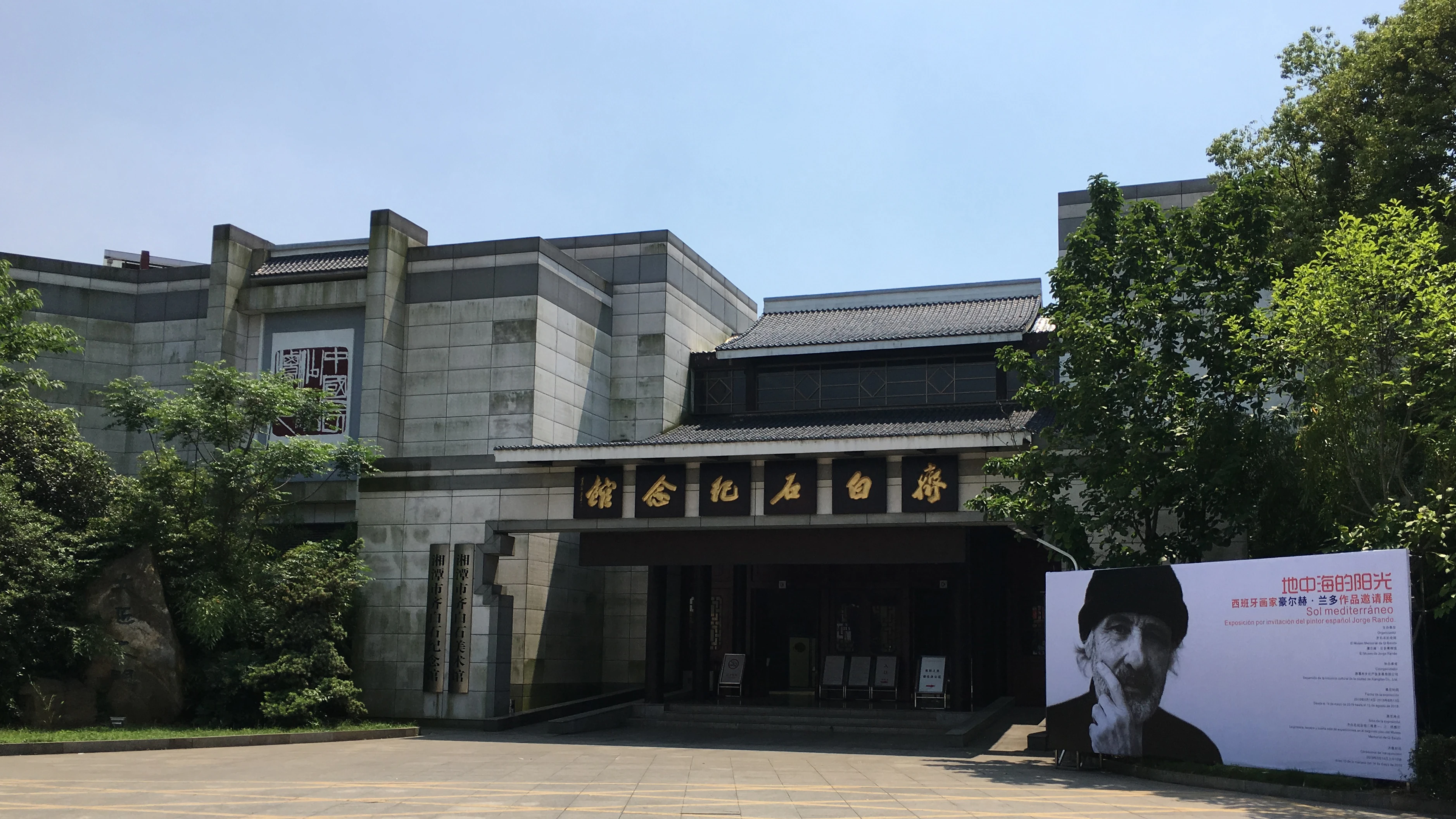
On 14 May 2019, Jorge Rando became the first Western artist to exhibit at the Qi Baishi Memorial Museum with the major exhibition The Light of the Mediterranean Reaches China, which received critical acclaim.

Wu Hongliang, one of the country’s most renowned academics and intellectuals, Vice President of the Beijing Fine Arts Academy, Director of the Beijing Fine Arts Academy Museum, and curator of China’s exhibition at the 2019 Venice Biennale, stated: “Rando’s work not only demonstrates extensive humanistic knowledge and profound philosophical thought, but also places greater emphasis on the pursuit of the artistic spirit and emotions that arise directly from the heart. When we look at his work, we can sense that the artist is both learned and sincere. The work of Master Jorge Rando is a work that can be breathed.”

Since May 2019, Jorge Rando’s Maternities (2018) has been part of the permanent collection of the Qi Baishi Memorial Museum in Xiangtan, while Miniatures (2018) is part of the permanent exhibition at the Beijing Fine Arts Academy.

During his stay in China, the Málaga-born master spent countless hours carefully observing the landscape, immersed in the mountains and rivers of this ancient civilisation. Back in his studio, alone and drawing on nearly 60 years of painting experience, the stroke remained the most sincere expression of his philosophical essence. Art, nature and spirituality came together on his canvases through Butterflies, which opened at the Museum Jorge Rando in October of that same year.

The Butterflies cycle would become the starting point for a five-part series comprising Butterflies, Finsternis, Dirty Paintings, Where Are the Dawns? and …Descendit ad Inferos—a pictorial exegesis exploring humanity’s relationship with nature, animals and, ultimately, with itself.

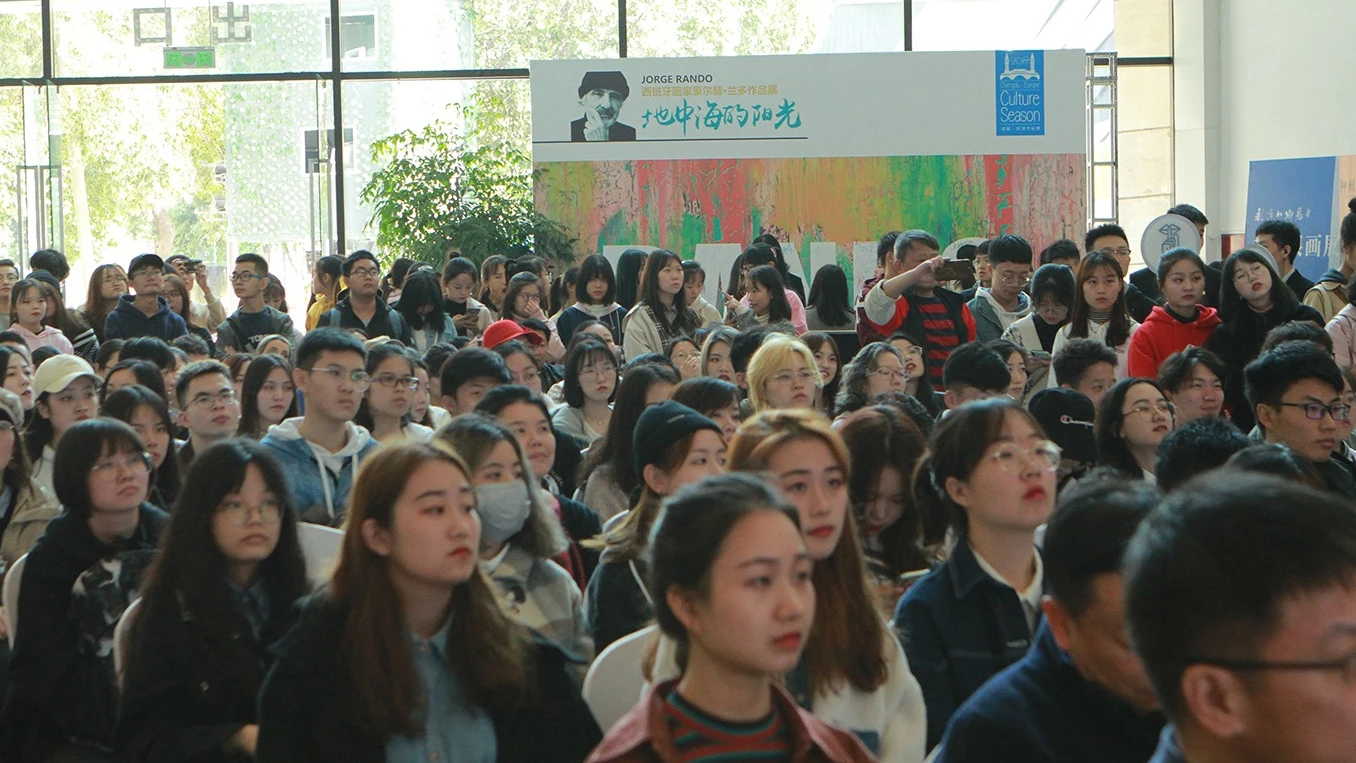
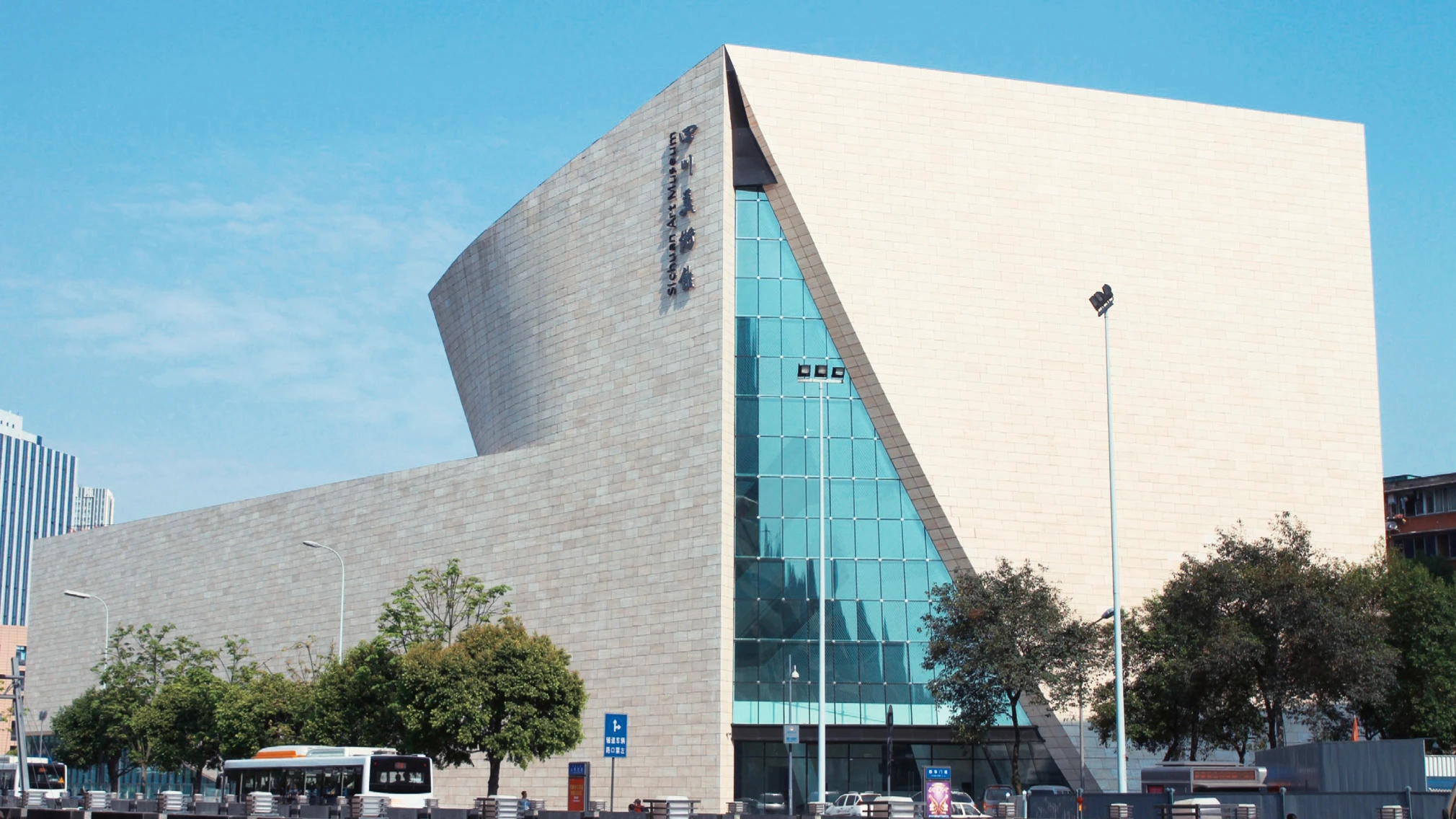
In November 2019, Jorge Rando presented the major exhibition Mediterranean Sun at the Sichuan Art Museum, the largest museum in southwestern China, representing Spain as the guest of honour at the prestigious Chengdu Europe Culture Season.

The opening ceremony was attended by numerous prominent figures, including H.E. Rafael Dezcallar, Ambassador of Spain to China, who highlighted that “Rando’s painting is a benchmark of contemporary Neo-Expressionism, a Neo-Expressionism shaped by his profound humanistic convictions.”

For Ms Yang Xie, Deputy Director of the Standing Committee of the Chengdu Municipal People’s Congress, “it is an honour to present this exhibition, in which we will undoubtedly find that the work of Master Jorge Rando is a benchmark of Neo-Expressionism.” Mr Tang Rui, Deputy Director of the Foreign Affairs Office of Sichuan Province, stated in his speech that “Jorge Rando’s exhibition marks a milestone in the cultural relations between Sichuan and Spain.”

In March 2023, the Museum Jorge Rando inaugurated the exhibition Encounter in the Arena: Pablo Picasso and Jorge Rando, curated in collaboration with the Picasso Birthplace Museum. The exhibition was one of the main events of the Picasso Celebration, organised by a binational commission of the cultural and diplomatic administrations of the governments of France and Spain and held at renowned cultural institutions across Europe and North America to mark the 50th anniversary of Picasso’s death.

In March 2024, the Shenzhen Art Museum presented the exhibition Jorge Rando in Shenzhen: Different Cycles from Different Periods, United by a Single Brush. The painter became the first European artist to exhibit at this prestigious institution, a flagship of contemporary art in the city known as the Asian Silicon Valley. Held as part of the celebrations marking the 50th anniversary of diplomatic relations between China and Spain, the event “not only strengthens the existing ties between the two countries, but also highlights the recognition and admiration that the Málaga-born master has earned in China,” wrote H.E. Rafael Dezcallar, Ambassador of Spain to China, in the exhibition catalogue. The catalogue also featured contributions from prominent Chinese figures, including distinguished academics from Tsinghua University and one of the country’s leading art critics.

Continuing his Asian tour, in July 2024 the exhibition Jorge Rando in Xuzhou: Different Cycles from Different Periods, United by a Single Brush opened at the Xuzhou Art Museum, making him the first Western artist to exhibit at this prestigious museum. The exhibition was organised by the Embassy of China in Spain, the Embassy of Spain in China, the Xuzhou Municipal Government, the Xuzhou Art Museum and the Fundación–Museum Jorge Rando, with the collaboration of Málaga City Council, the Government of Andalusia, the Miguel de Cervantes Library in Shanghai and the China Cultural Centre in Madrid.

Throughout these years, the Spanish master has continued his prolific artistic practice, developing thematic cycles such as Maternities, Afrika and My Butterflies, while also creating new cycles such as Soldiers. His artistic language continues to explore the philosophical meaning of life while opening up new lines of research, including geometry.

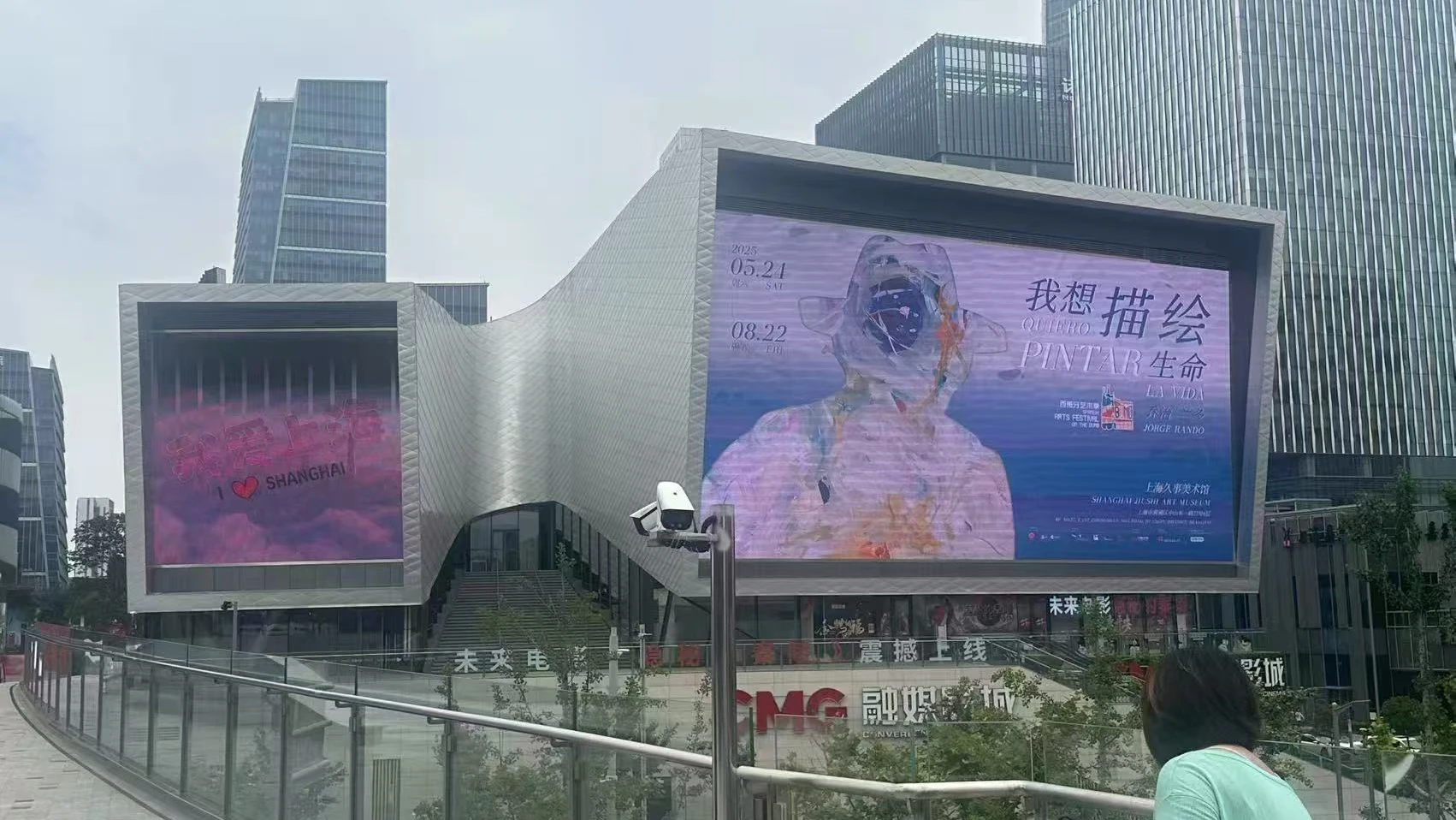
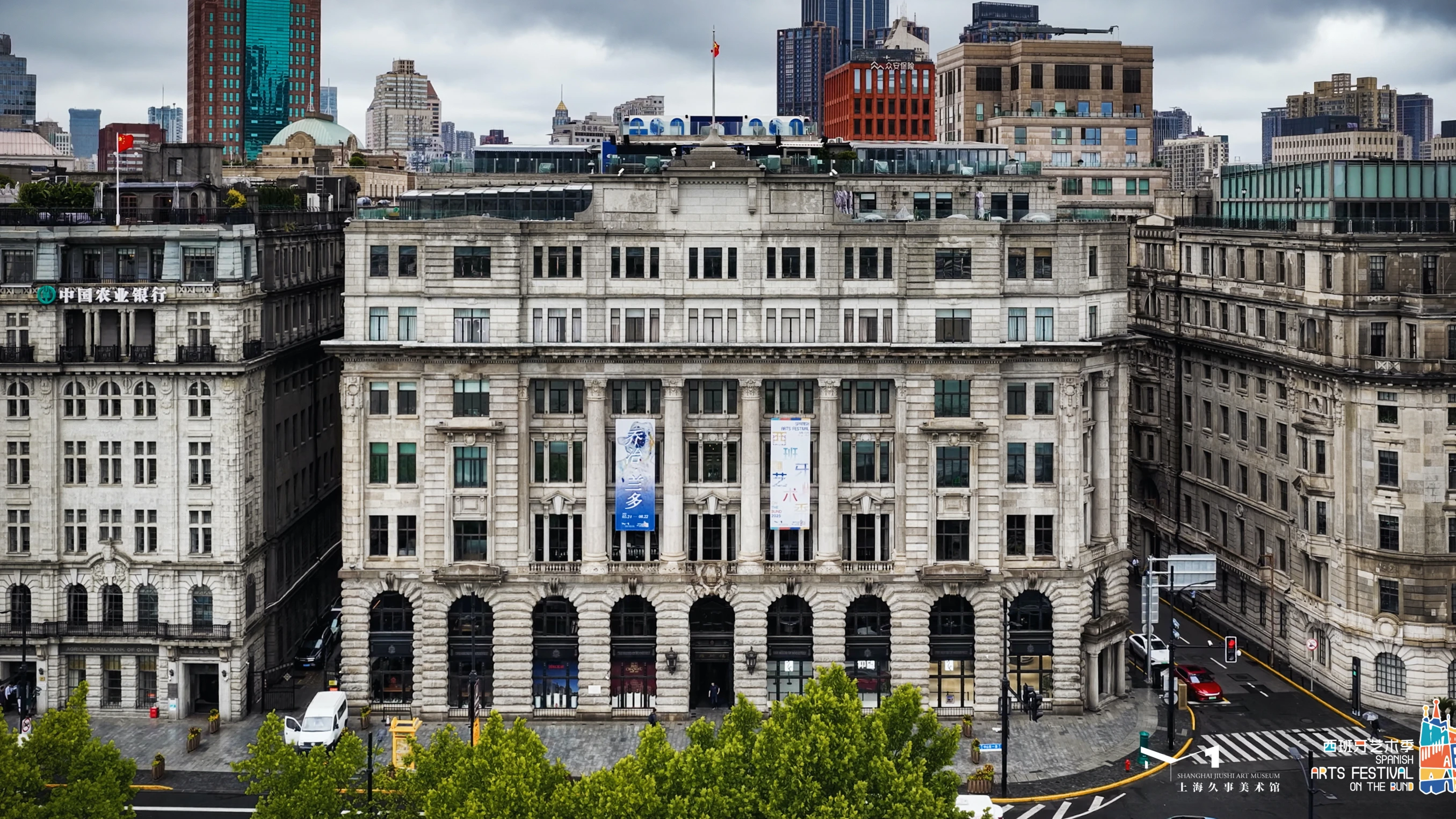
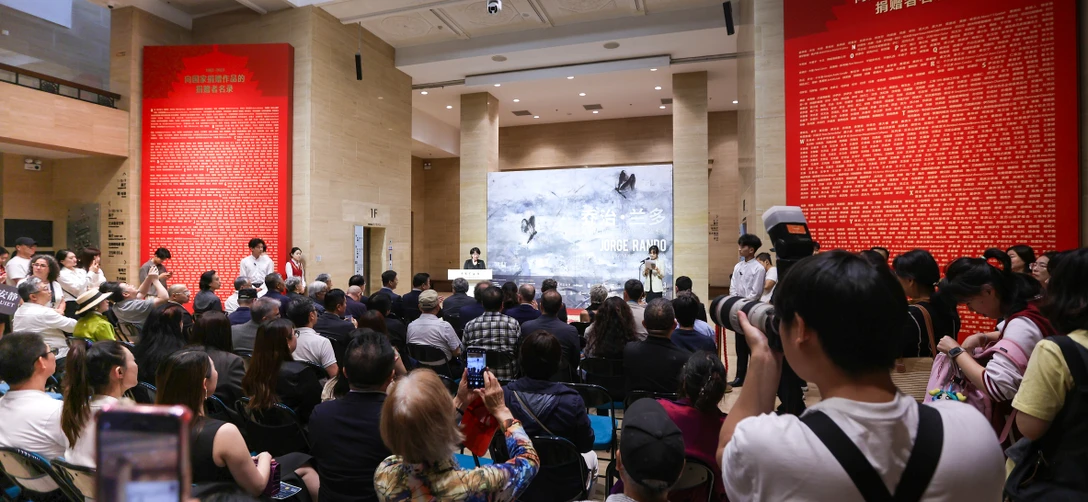
In May 2025, Jorge Rando inaugurated an exhibition at the Shanghai Jiushi Art Museum, located in the iconic Bund district. Housed in a historic building dating from 1832, the museum is one of Shanghai’s leading institutions for international exhibitions. Under the title I Want to Paint Life, the exhibition presented 149 works and marked the beginning of the Spanish art season in the Asian metropolis.

In November 2025, Jorge Rando inaugurated his sixth exhibition in China with Painting Without Love Is Only Colour Without a Soul at the Jinji Lake Art Museum in Suzhou. The exhibition was held as part of the celebrations marking the 20th anniversary of the establishment of the Comprehensive Strategic Partnership between China and Spain.

That same year, he received the Málaga City Arts Award and the COPE International Career Award.

In May 2026, Jorge Rando exhibited at the National Art Museum of China (NAMOC), one of the most important and prestigious art museums in Asia and an internationally recognised cultural institution. Located in the heart of Beijing, NAMOC is China’s leading national art institution and hosts major exhibitions featuring masters from throughout the history of world art.

The Málaga-born painter’s New Expressionism was presented in the exhibition The Strength of Expression: The Art of Jorge Rando, marking a historic milestone for European art.

For the coming years, he has exhibitions scheduled in China, various countries across Latin America and the United States.

Jorge Rando currently lives and works between Málaga and Hamburg and gives masterclasses at prestigious universities around the world, sharing the spirituality and humanism at the heart of New Expressionism. In recent years, he has delivered lectures and masterclasses at the Academy of Fine Arts of Hunan Province, the National Academy of Fine Arts of Oil Painting in Beijing and the Fine Arts Academy, among others.

Another book on his work, entitled Spanish Expressionism in Three Acts: Francisco de Goya, José Gutiérrez Solana and Jorge Rando, written by Professor Antonio López Vega, is due to be published shortly.